Scientists speculate that the age of antibiotics may be coming to an end. This is because there has been a relentless increase in antibiotic resistance across all classes of drug. Furthermore, recent articles on antibiotic resistance in China paint an alarming picture of a near-future where antibiotics will have little therapeutic value (Heddini et al 2009).
Sadly, the use of antibiotics inevitably leads to the selection of resistance traits; the overuse and misuse of antibiotics in medical and other situations makes it increasingly unlikely that we will be able to stay ahead in the war against infection. Important work in such areas as quorum-sensing blockade may produce important new drugs, but these will not be available soon.
Various alternatives have been proposed from the natural world, and this article reviews one of the most prominent candidates that being the lactoperoxidase system, specifically thiocynate ions as contained in 1st Line™.
Lactoperoxidase/ Thiocynates
The enzyme LPO is one of the body’s major first-line defences against infection (Pruit ’87, Ratner & Prince 2000, Gerson 2000, Wijkstrom-Frei et al ‘03). LPO produces ions such as HOSCN, which have a broad spectrum of activity against gram-positive and gram-negative bacteria, HIV-1 and other viruses, moulds, yeasts, mycoplasma and protozoa (Pruitt & Reiter ’85, de Wit & van Hooijdonk ’96, Wang et al 2000, van Hooijdonk et al 2000, Seifu et al ’05, Fweja et al ’08). LPO is critical for the control of pathogens in milk from lactating animals (Reiter et al ’86) including humans (Shin et al 2000). It also plays a key role in defending the respiratory and gastro-intestinal tracts (Wijkstrom-Frei et al ‘03).
LPO utilises dietary thiocyanate as one substrate, producing hypothiocyanite (HOSCN) ions. These ions kill pathogenic bacteria (Table 1) via three separate mechanisms. They inhibit bacterial glycolysis; they inhibit bacterial nicotinamide adenine dinucleotide (NADH)/nicotinamide adenine dinucleotide phosphate (NADPH)–dependent reactions (Reiter & Perraudin ‘91); and they oxidise bacterial sulphydril groups (Slungaard & Mahoney ’91, Thomas & Aune ‘78). LPO also utilises iodine, forming hypohalide ions. These have an additional spectrum of anti-bacterial activity.
Table 1: LPO activity in vitro: (number of strains tested)
|
Bacteria
• Escherichia coli (10)
• Yersinia enterocolitica (4)
• Klebsiella pneumoniae (13)
• Klebsiella oxytoca (10)
• Streptococcus agalactiae
• Streptococcus mutans
• Staphylococcus aureus
• Salmonella species (12)
• Shigella sonnei (15)
• Listeria monocytogenes
• Acinetobacter species (40)
• Neisseria species (20)
• Haemophilus influenzae (20)
• Campylobacter jejuni (14)
|
• Aeromonas hydrophila (8)
• Pseudomonas aeruginosa (6)
• Capnocytophaga ochracea
• Selenomonas sputigena
• Wolinella recta
• Enterobacter cloacae (12)
Viruses
• Herpes simplex virus
• Immunodeficiency virus
• Respiratory syncytial virus
Yeasts
• Candida albicans
|
Uniquely, HOSCN ions also have potent anti-viral activity. Many viruses have sulfhydryl groups on their coat (ie Mangold & Streeck ‘93); when these are oxidised (ie by thiocyanate) the viral coat structure is damaged or destroyed (Almeida et al ‘79).
HOSCN ions are not toxic to human cells at the levels produced by LPO, and have little if any effect on probiotic species, making them a near-perfect antibiotic system. Furthermore, it is very difficult for microorganisms to acquire resistance to LPO; if it was easy for pathogens to become LPO-resistant, a key element in our immune system would have been disabled and we would not have survived as a species.
Today, however, the LPO system is frequently compromised. Lactoperoxidase is a ferroprotein, and iron depletion / deficiency is one of the most common forms of dysnutrition. There are also growing problems with two of LPO’s substrates, thiocyanate and iodine. Thiocyanates are derived from dietary glucosinolates (in brassica), or from cyanogenic glycosides (in beans, sweet potato and millet). Since 1950, UK consumption of fresh vegetables has fallen by 24% (Hinton ‘08). Iodine depletion is becoming more prevalent, due inter alia to reductions in salt intake and the use of (non-iodinated) sea salt (Li et al ‘06, Nawoor et al ‘06). The net effect of depletion in iron, iodine and cyanogens on LPO activity is likely to be very significant in reducing our ability to ward off infections.
Due to its chemistry, LPO is not a suitable therapeutic tool; if the milk-derived enzyme were to be consumed it would, like other milk proteins, be digested and rapidly rendered ineffective. However, the bactericidal effects of LPO can be mimicked and amplified by delivering HOSCN ions directly. This technology was initially developed in France for food plant sterilisation, and subsequently to sterilise salad leaves. It is used as an antiseptic in Belgium, and has been adapted by the WHO for bulk milk sterilisation in China and Korea (FAO/WHO ‘05).
We have reviewed the possibility that the extensive use of HOSCN might encourage the development of microbial resistance strategies, and believe that this is unlikely. Only a small number of intrinsically LPO-resistant microorganisms are known (ie Oram & Reiter ’66). While resistance may be acquired in certain specific circumstances (ie Leyer & Johnson ’93), the evolutionary historical evidence indicates that this is clinically insignificant. Moreover, most mammals utilize LPO / HOSCN on a daily basis and it remains an effective element in the innate immune system.
With regard to safety, it should be pointed out that the level of hypothiocyanous ions in 1st Line is well below the safe and tolerable levels of thiocyanate ions produced within the body (Borgers & Junge ’79, Medizinische ’82, WHO ‘95).
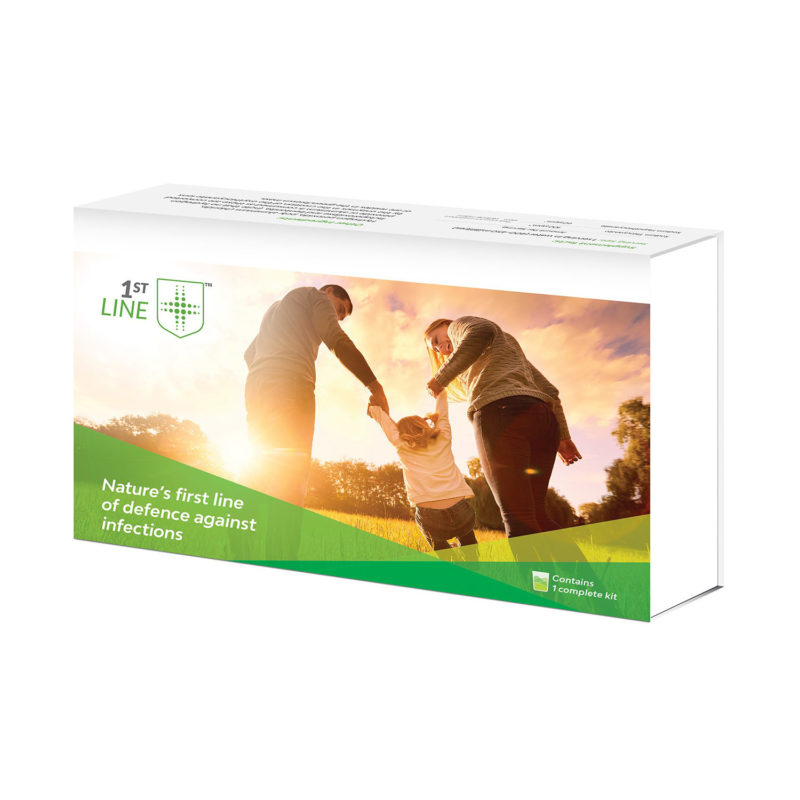
1st Line™, the world’s first thiocynate ion producing kit
1st Line’s patented formula makes up into a drink containing hypothiocyanite and hypothiocyannous ions, identical to those in tears, saliva and milk. These ions are a critical defence against a wide range of pathogens including bacteria, yeasts, fungi and viruses; many of which they destroy on contact.
Until recently, the unstable hypothiocyanite ions could not be stored. In a technical breakthrough, the 1st Line kit enables the ions to be produced immediately prior to use so they can be consumed ‘fresh’, whenever required. For the first time, hypothiocyanite ions can be used as a supplement.
These bio-identical immune molecules differ from antibiotics in two ways:
1. The ions are very small molecules, with a molecular weight of around 90. They therefore diffuse further and faster though tissues than the much larger synthetic antibiotics.
2. They kill a surprisingly wide range of disease-causing micro-organisms, but unlike synthetic antibiotics do not damage probiotic species such as lactobacilli and bifidobacteria. Our immune systems and these beneficial bacterial species have co-evolved, and have ‘learned’ to co-exist.
1st Line should be used at the first symptom of an infection. Only one kit should be used per day and often only one is required. If symptoms persist another kit can be consumed the following day. Persons with more serious symptoms can use 1st Line up to twice a week, dependent upon need. For those who want to prevent the symptoms of infection 1st Line can be used once every few months.
And let us rememeber that hypothiocyanite ions are not toxic to human cells, they appear to have excellent tissue penetration and have little if any effect on probiotic species, making them a near perfect antibiotic system.
Summary
In the war against infectious micro-organisms, where we are currently losing ground, 1st Line is a break-through. For the first time, it enables the clinician or indeed any user to utilise one of the most powerful elements in our array of immune defences, namely the innate immune enzyme lactoperoxidase (LPO).
In the body, LPO utilises dietary thiocyanates from such sources as brassica vegetables to produce HOSCN ions, which kill a wide range of bacterial and viral pathogens (see Table 1, below). Uniquely, and as would be expected from an innate immune defence, this wide spectrum of anti-microbial activity does not include the essential probiotic species which are immune to LPO activity.
Lactoperoxidase therefore has all the attributes of an ideal antibiotic, and this has lead many scientists to explore its therapeutic uses. All previous attempts, however, have failed because the commercial enzyme is a dietary protein derived from milk. When eaten, LPO is rapidly broken down in the stomach and small intestine and its enzymatic activity is lost.
1st Line™ is a far more intelligent approach. It uses phase-bound lactoperoxidase remotely, supplying it with the substrates it would normally use to produce HOSCN ions outside the body. These ions are then ingested, mimicing the endogenous effects of the enzyme exactly.
Given the known efficacy and safety of the LPO / HOSCN system, and access to preliminary clinical trial data, I regard the development of this system as a medical break-through. I believe that the development of the LPO / HOSCN system is as important as the discovery of penicillin, and will make as great an impact on infection control.
To the bureaucratic mind, however, it presents a substantial problem. First direct devolves infection control to the end-user, who now has direct access to a safe, food-derived anti-infection strategy. This is the internal equivalent to anti-septics, which everyone can use, and thus runs counter to the interests of the pharmaceutical industry, their profit margins and regulatory bodies.
There is no question about the value of the enzyme system. The only question is how long this anomaly will be allowed to continue before big Pharma and its regulatory muscle either forcibly re-classify First Line as a drug, or suppress it altogether.
References
- Almeida JD, Bradburne AF, Wreghitt TG. The effect of sodium thiocyanate on virus structure. J Med Virology 1979. 4(4):269-277
- Babineau TJ, Hackford A, Kenler A, Bistrian B, Forse RA, Fairchild PG, Heard S, Keroack M, Caushaj P, Benotti P. A phase II multicenter, double-blind, randomized, placebo-controlled study of three dosages of an immunomodulator (PGG-glucan) in high-risk surgical patients.
Arch Surg. 1994 Nov;129(11):1204-10.
- Babineau TJ, Marcello P, Swails W, Kenler A, Bistrian B, Forse RA. Randomized phase I/II trial of a macrophage-specific immunomodulator (PGG-glucan) in high-risk surgical patients. Ann Surg. 1994 Nov;220(5):601-9.
- Borgers D., Junge B., Thiocyanate as an indicator of tobacco smoking.
- Preventive Medecine 8: 351-357 (1979)
- Brousseau M, Miller SC. Enhancement of natural killer cells and increased survival of aging mice fed daily Echinacea root extract from youth. Biogerontology. 2005;6(3):157-63.
- Czop JK, Austen KF ‘85: A b-glucan inhibitable receptor on human monocytes: its identity with the phagocytic receptor for particulate activators of the alternative complement pathway. J Immunol 1985; 134: 2588-2593.
- de Felippe J J, da Rocha-Silva F M, Maciel FM, Soares A de M, Mendes NF: Infection prevention in patients with severe multiple trauma with the immunomodulator beta 1-3 polyglucose (glucan). Surgery, Gynecology and Obstetrics 1993; 177(4): 383-388.
- Dellinger EP, Babineau TJ, Bleicher P, Kaiser AB, Seibert GB, Postier RG, Vogel SB, Norman J, Kaufman D, Galandiuk S, Condon RE. Effect of PGG-glucan on the rate of serious postoperative infection or death observed after high-risk gastrointestinal operations. Betafectin Gastrointestinal Study Group. Arch Surg. 1999 Sep;134(9):977-83.
- Di Luzio NR, Williams DL: The role of glucan in the prevention and modification of microparasitic diseases. In: Assessments of chemical regulation of immunity in veterinary medicine. Gainer JH, ed. NY: Scientific, Medical and Scholarly Pub., 1983
- FAO/WHO Technical Report 2005. Benefits and Potential Risks of the Lactoperoxidase System of Raw Milk Preservation. Report of a FAO/WHO technical meeting, Rome, Nov-Dec ‘05
- FDA ’99. Over-the-counter drug products containing colloidal silver ingredients or silver salts. Department of Health and Human Services (HHS), Public Health Service (PHS), Food and Drug Administration (FDA). Final rule. Fed Regist 64 (158): 44653–8. August 1999
- Fisher H, 2009. Mechanism and Function of DUOX in the Epithelia of the Lung. Antioxidants and Redox Signalling 11(10):1-14
- Fweja LW, Lewis MJ, Grandison AS. Challenge testing the lactoperoxidase system against a range of bacteria using different activation agents. J Dairy Sci. 2008 Jul;91(7):2566-74.
- Gerson CJ, Sabater M, Scuri A, Torbati R, Coffey JW, Abraham I, Lauredo R, Forteza A, Wanner M, Salathe WM, Abraham WM, Conner GE. 2000. The lactoperoxidase system functions in bacterial clearance of airways. Am. J.Respir. Cell Mol. Biol. 22:665–671.
- Harger-Domitrovich SG, Domitrovich JW, Ruby BC. Effects of an Immunomodulating Supplement on Upper Respiratory Tract Infection Symptoms in Wildland Firefighters Medicine & Science in Sports & Exercise. 40(5):S353.
- Heddini A, Cars O, Qiang S, Tomson G. Antibiotic resistance in China–a major future challenge. Lancet. 2009 Jan 3;373(9657):30.
- Hinton WL. Supply & Demand for Vegetables in the UK. ISHS Acta Horticulturae 72
- Jung K, Ha Y, Ha SK, Han DU, Kim DW, Moon WK, Chae C: Antiviral effect of Saccharomyces cerevisiae beta-glucan to swine influenza virus by increased production of interferon-gamma and nitric oxide. J Vet Med B Infect Dis Vet Public Health. 2004 Mar;51(2):72-6.
- Kernodle DS, Gates H, Kaiser AB: Prophylactic Anti-Infective Activity of Poly-(1-6)-beta-D—Glucapyranosyl-(1-3)-beta-D-Glucapyranose Glucan in a Guinea Pig Model of Staphylococcal Wound Infection. Antimicrob Agents & Chemother 42:545-549, ‘98
- Kiermeier F, Kuhlman H, Thiocyanate forms and doseage. Münch. Med. Wochenschr. (1972)
- Leyer GJ, Johnson EA. Acid adaptation induces cross-protection against environmental stresses in Salmonella typhimurium. Appl Environ Microbiol. 1993 Jun;59(6):1842-7.
- Li M, Eastman CJ, Waite KV, Ma G, Zacharin MR, Topliss DJ, Harding PE, Walsh JP, Ward LC, Mortimer RH, Mackenzie EJ, Byth K, Doyle Z. Are Australian children iodine deficient? Results of the Australian National Iodine Nutrition Study. Med J Aust. 2006 Feb 20;184(4):165-9
- 2.
- Mangold CM, Streeck RE. Mutational analysis of the cysteine residues in the hepatitis B virus small envelope protein. J Virol. 1993 Aug;67(8):4588-97
- Medizinische und biologische Bedeutung der thiocyanate (Rhodanide) Veb Verlag Volk (1982) – Ed. W.Weuffen (Berlin)
- Nawoor Z, Burns R, Smith DF, Sheehan S, O’Herlihy C, Smyth PP. Iodine intake in pregnancy in Ireland–a cause for concern? Ir J Med Sci. 2006 Apr-Jun;175(2):21-4.
- NCCAM ’06. Colloidal Silver Products. National Center for Complementary and Alternative Medicine. December 2006. http://nccam.nih.gov/health/silver
- Oram JD, Reiter B. The inhibition of streptococci by lactoperoxidase, thiocyanate and hydrogen peroxide. The oxidation of thiocyanate and the nature of the inhibitory compound. Biochem J. 1966 Aug;100(2):382-8.
- Pruitt KM, Reiter B. 1985. Biochemistry of peroxidase system: antimicrobial effects. In The Lactoperoxidase System: Chemistry and Biological Significance. K. M. Pruitt and J. O. Tenovuo, editors. Marcel Dekker, Inc. New York. 143–178.
- Pruitt, K. M. 1987. The salivary peroxidase system: thermodynamic, kinetic and antibacterial properties. J. Oral Pathol. 16:417–420.
- Rada B, Leto TL. Oxidative Innate Immune Defenses by Nox/Duox Family NADPH Oxidases. Egesten A, Schmidt A, Herwald H (eds): Trends in Innate Immunity. Contrib Microbiol. Basel, Karger, 2008, vol 15, pp 164–187
- Rasmussen, LT, Konopski Z, Oian P, Seljelid R; Killing of Escherichia coli by mononuclear phagocytes and neutrophils stimulated in vitro with beta-1, 3-D-polyglucose derivatives, Microbiol Immunol 36(11):1173-1188. 1992.
- Rasmussen, LT and Seljelid, R.: Novel Immunomodulators With Pronounced In Vitro Effects Caused by Stimulation of Cytokine Release, J Cell Biochem; 46:60-68. 1991. Quote: “Beta-1, 3-D-polyglucose derivatives protect mice against otherwise lethal bacterial infections.”
- Rasmussen LT, Seljelid R, Dynamics of blood components and peritoneal fluid during treatment of murine E. coli sepsis with beta-1, 3-D-polyglucose derivatives. I: Cells. Scand J Immunol 32(4): 321-331. Oct 1990.
- Rasmussen LT, Seljelid R, Dynamics of blood components and peritoneal fluid during treatment of murine E. coli sepsis with beta-1, 3-D-polyglucose derivatives. II. Interleukin 1, tumor necrosis factor, prostaglandin E2 and leukotriene B4, Scand J Immunol 32(4): 333-340. Oct 1990.
- Rasmussen LT, Seljelid R: The modulatory effect of lipoproteins on the release of interleukin 1 by human peritoneal macrophages stimulated with beta 1 -3D-polyglucose derivatives. Scand J Immunol 1989; 29: 477-484.
- Rasmussen LT, Seljelid R, Production of prostaglandin E2 and interleukin 1 by mouse peritoneal macrophages stimulated with beta-1, 3-D-glucan derivatized plastic beads Scand J Immunol 26(6): 731-736. Dec 1987.
- Rasmussen, LT, Fandrem. Jr., and Seljelid R., Dynamics of Blood Components and Peritoneal Fluid During Treatment of Murine E. Coli Sepsis with beta-1, 3-D-polyglucose Derivatives; Scand. J Immunol 63:73-80 1985.
- Ratner AJ, Prince A. Lactoperoxidase. New recognition of an “old” enzyme in airway defenses. Am J Respir Cell Mol Biol. 2000 Jun;22(6):642-4. Review.
- Registry of Toxic Effects of Chemical Substances ’77, German drug use
- Reiter, B., V. M. Marshall, L. Bjorck, and C. G. Rosen. 1976. Nonspecific
- bactericidal activity of the lactoperoxidases-thiocyanate–hydrogen peroxide
- system of milk against Escherichia coli and some gram-negative pathogens.
- Infect. Immunol. 13:800–807.
- Reiter B, Perraudin J-P. 1991. Lactoperoxidase: biological functions. In Peroxidases in Chemistry and Biology, Vol. I. J. Everse, K. E. Everse and M. B. Grisham, editors. CRC Press. Boca Raton, FL. 144–180.
- Seifu E, Buys EM, Donkin EF. 2003. Significance of the lactoperoxidase system in the dairy industry and its potential applications: a review. Trends in Food Science and Technology, 16:137-154
- Shin, K., M. Tomita, and B. Lonnerdal. 2000. Identification of lactoperoxidase in mature human milk. J. Nutr. Biochem 11:94–102.
- Slungaard A, Mahoney JR Jr. Thiocyanate is the major substrate for eosinophil peroxidase in physiologic fluids. Implications for cytotoxicity. J Biol Chem. 1991 Mar 15;266(8):4903-10
- Talbott S, Talbott J. Beta 1,3/1,6 glucan decreases upper respiratory tract infection symptoms and improves psychological well-being in moderate to highly-stressed subjects. Agro Food Industry Hi-Tech. January/February 2010. Vol 21, n1
- Talbott S, Talbott J. Effect of Beta 1,3/1,6 Glucan on Upper Respiratory Tract Infection Symptoms and Mood State in Marathon Athletes. Journal of Sports Science and Medicine (2009) 8, 509-515
- TGA ’05. Regulation of colloidal silver and related products. Australian. Therapeutic Goods Administraion. 2005-11-09. www.tga.gov.au/docs/html/csilver.htm
- Thomas EL, Aune TM. Lactoperoxidase, peroxide, thiocyanate antimicrobial system: correlation of sulfhydryl oxidation with antimicrobial action. Infect Immun. 1978 May; 20(2): 456–463.
- Van Hooikdonk ACM, Kussendrager KD, Steijns JM. 2000. In vivo antimicrobial and antiviral activity of components in bovine milk and colostrums involved in non-specific defence. Br J Nut, 84 (Suppl.1): S127-134
- Wang H, Ye X, Ng TB. First demonstration of an inhibitory activity of milk proteins against human immunodeficiency virus-1 reverse transcriptase and the effect of succinylation. Life Sci. 2000 Oct 20;67(22):2745-52
- Wijkstrom-Frei C, El-Chemaly S, Ali-Rachedi R, Gerson C, Cobas MA, Forteza R, Salathe M, Conner GE. Lactoperoxidase and human airway host defense. Am J Respir Cell Mol Biol. 2003 Aug;29(2):206-12.
- De Wit JN, van Hooijdonk CCM. 1996. Structure, function and applications of lactoperoxidase in natural antimicrobial systems. Netherlands Milk and Dairy Journal, 50:227-244
- Mansell PWA, Ichinose I-I, Reed RJ, Krements ET, McNamee RB, Di Luzio NR: Macrophage-mediated destruction of human malignant cells in vivo. J Nat Cancer Inst 1975; 54: 571-580.
- Onderdonk AB, Cisneros RL, Hinkson P, Ostroff G: Anti-infective effect of poly-beta-1,6-glucotriosyl-beta 1,3glucapyranose glucan in vivo. Infection & Immunity 60:1642-1647, ‘92
- Robertsen B, Engstad RE, Jorgensen JB. Beta- glucans as Immunostimulants in fish. Immune Responses l994, V. 1 Fair Haven, NJ, USA.
Song Y-L, Hsieh Y-T. Immunostimulation of tiger shrimp hemocytes for generation of microbicidal substances: analysis of reactive oxygen species. Developmental and Comparative immunology. Vol.l, No.3, pp.201-209, 1994.Elsevier Science.
- Suzuki, Hashimoto K, Ohno K, Tanaka H, Yadomae T Immunomoddulatory by orally administered beta glucan in mice. Int J Immunopharmacology 1989;11:761-769
- Tzianabos AO, Cisneros RL; Prophylaxis with the immunomodulator PGG glucan enhances antibiotic efficacy in rats infected with antibiotic-resistant bacteria, Ann NY Acad Sci 797: 285-287; Oct 1996.
- Vetvicka V, Terayama K, Mandeville R, Brousseau P, Kournikakis B, Ostroff G: Pilot Study:Orally-Administered Yeast Beta1,3-glucan Prophylactically Protects Against Anthrax Infection and Cancer in Mice; J Am Nutraceutical Assocn 5:1-5, ‘02
- Wakshull E, Brunke-Reese D, Lindermuth J, Fisette L, Nathans RS, Crowley JJ, Tufts JC, Zimmerman J, Mackin W, Adams DS. PGG-glucan, a soluble beta-(1,3)-glucan, enhances the oxidative burst response, microbicidal activity, and activates an NF-kappa B-like factor in human PMN: evidence for a glycosphingolipid beta-(1,3)-glucan receptor. Immunopharmacology. 1999 Feb;41(2):89-107.
- Washburn WK, Otsu I, Gottschalk R, Monaco AP: PGG-glucan, a leukocyte-specific immunostimulant, does not potentiate GVHD or allograft rejection. J Surg Res 62, 179-83, ‘96
- Williams D.L. and Diluzio N.R.; Modification of Experimental Viral Hepatitis by Glucan Induced Macrophage Activation. In the Reticuloendothelial System and Pathogenesis of Liver Disease, Liehr and Grun, eds. Elsevier/North Holland Biomedical Press; pp. 363-368. 1983.
- Williams D.L. and Diluzio N.R.; Glucan-Induced Modification of murine Viral Hepatitis. Science (1980), 208: 67-69. 1980.
- Williams D.L., et al; Protective Effect of Glucan in Experimentally Induced Candidiasis. J. Reticuloendothel; Soc 23: 479-490. 1978.
- Williams D.L, Diluzio NR, Glucan induced modification of experimental Staphylococcus aureus infection in normal, leukemic and immunosuppressed mice. Adv Exp Med Biol 121(A): 291-306. 1979